What makes cornhole rules “official”?
Official cornhole rules are standardized guidelines that keep every game fair and consistent. They define the correct cornhole distance, the dimensions of boards and bags, how to set up the court, what counts as a valid throw and exactly how cornhole scoring works. Most serious leagues and tournaments use rules that follow the American Cornhole League (ACL) rulebook or closely resemble it.
Even if you mostly play casually, using official cornhole rules reduces confusion and makes it much easier to transition to league or tournament play later on. If you first want a friendly, narrative explanation of the sport itself, check out What Is Cornhole? and then use this page as a technical reference for the official rules. Or visit our Cornhole Hub.
Regulation equipment & cornhole distance
Official rules always start with the equipment and setup. To make cornhole scoring and gameplay comparable across different courts, your boards, bags and cornhole distance must meet fixed standards.
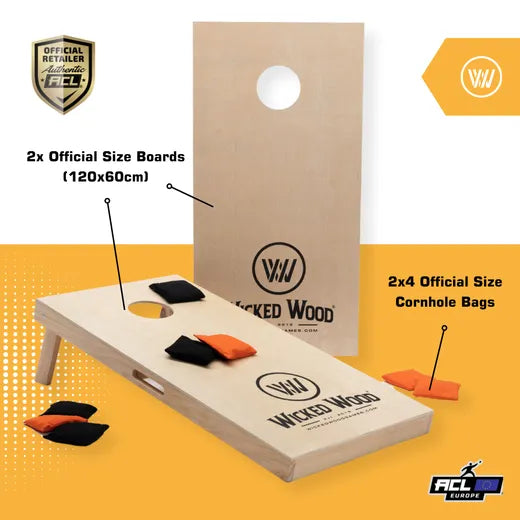
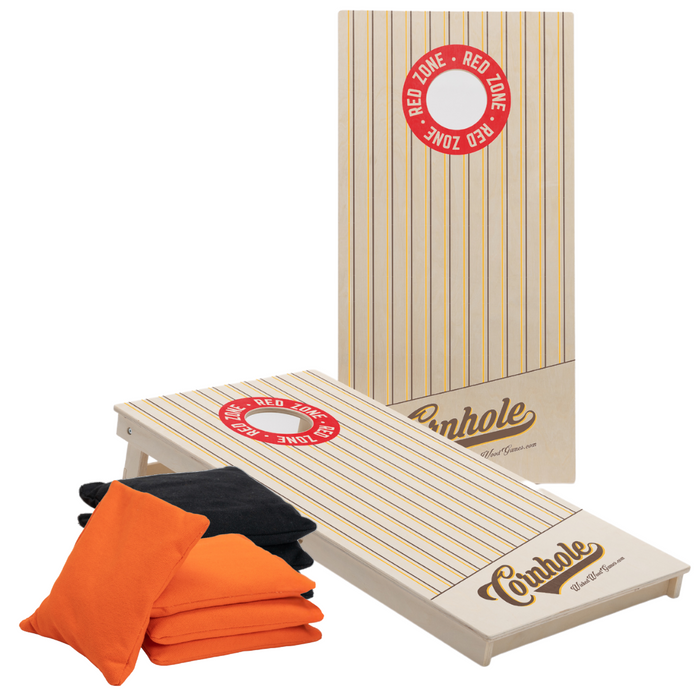
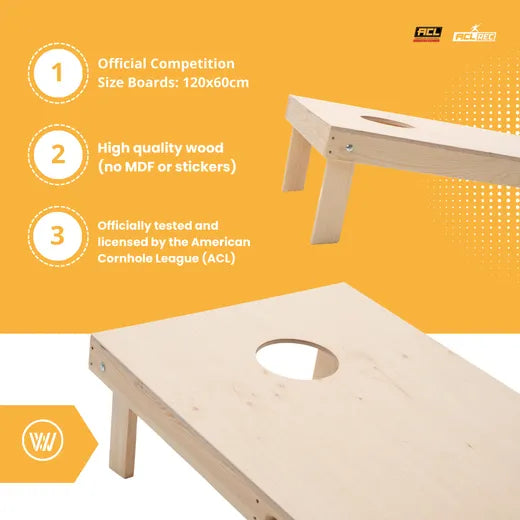
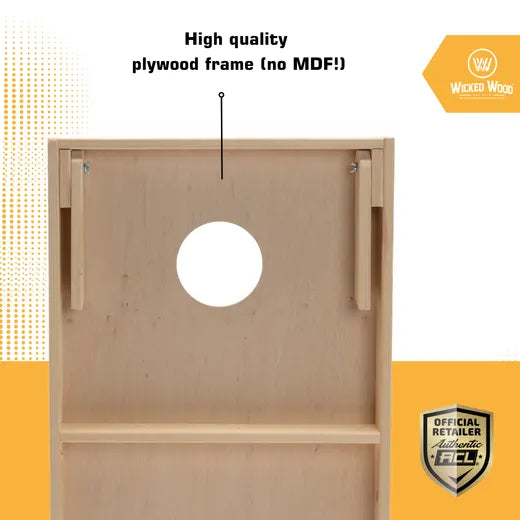
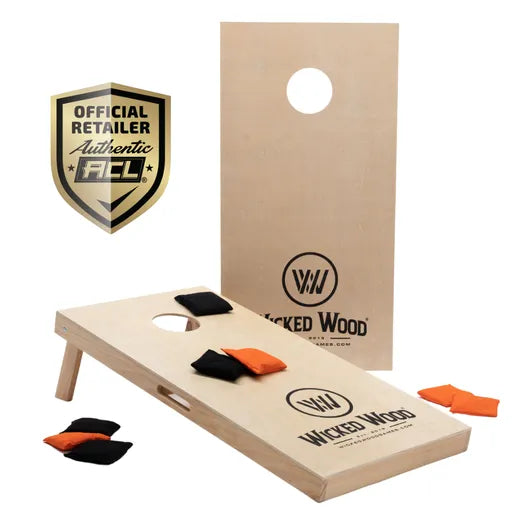
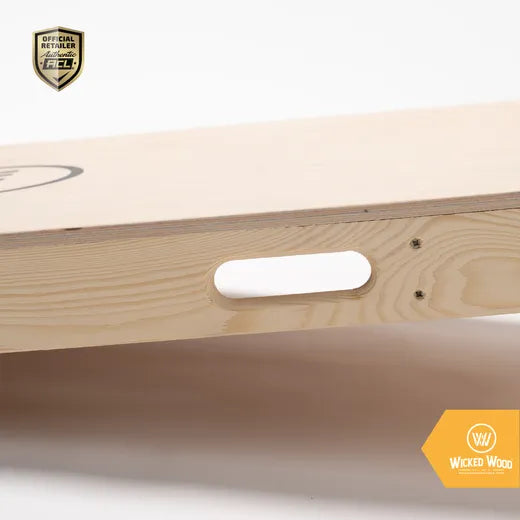
- Boards: Official cornhole boards are usually 4 ft x 2 ft, with a centered hole toward the top. The playing surface must be smooth and stable so bags can slide predictably.
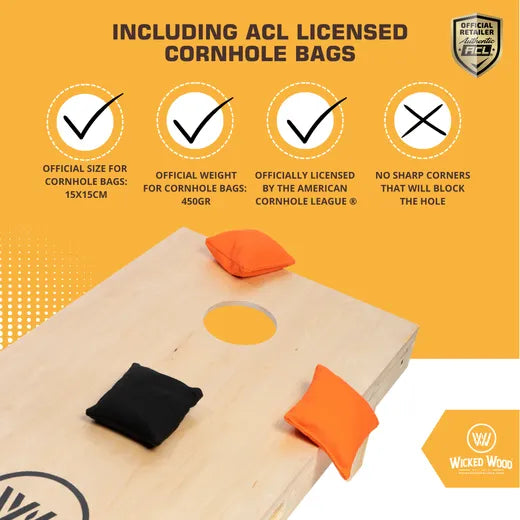
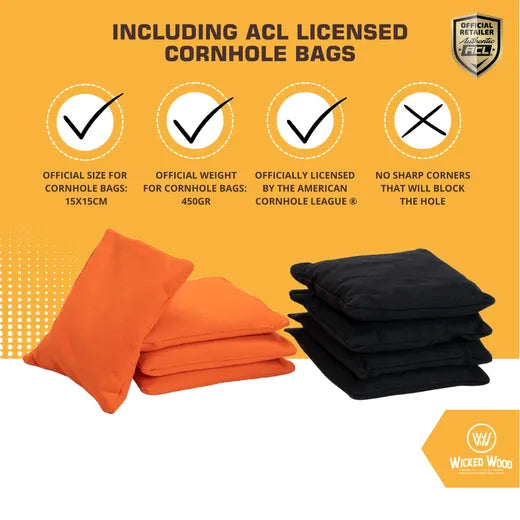
- Bags: A full set consists of eight cornhole bags, four per color. Modern bags are usually about 6" x 6" and filled to a consistent weight for predictable throws.
- Cornhole distance: In standard adult play, the front edges of the boards are 8.23 meters (27 ft) apart. For children, beginners, or smaller spaces you can shorten this cornhole distance, as long as all courts use the same distance.
For diagrams, dimensions and tips for smaller spaces, see our detailed guide on cornhole distance. If you want tournament-level gear right away, take a look at our high-quality cornhole sets and pair them with pro-style cornhole bags or Wicked Wood Games bags.
Singles vs doubles: official game formats
Official cornhole matches are played as singles (1 vs 1) or doubles (2 vs 2). The basic cornhole rules and cornhole scoring stay the same, but player positions and the throwing order differ per format.
- Singles (1 vs 1): Two players stand at opposite boards and throw all their bags from the same lane. After the round, both players walk to the other side to score and collect bags.
- Doubles (2 vs 2): In doubles, teammates stand at opposite boards, usually directly across from each other. One player from each team throws from one side, while their partners throw from the other side.
- Rotation: In both formats, players alternate throws, one bag per turn, until all eight bags in that round have been thrown.
If you want to see exactly where each player stands, how often sides are switched and how the rotation works, read Singles vs Doubles: Cornhole Game Format Differences. For a more narrative explanation of gameplay, including setup and turn order, you can also check How to Play Cornhole.
Turn order & round structure
Every official cornhole match is structured in rounds. A round is completed once both players or teams have thrown their four bags and the cornhole scoring has been calculated.
- Who starts? At the start of the match, the first thrower is usually determined with a coin flip, a short “throw-off,” or simple house rules that both sides agree on.
- Throwing order: Players alternate, one bag at a time, until all eight bags have been thrown. The player who starts the round throws the first bag.
- Start of the next round: In most official formats, the player or team that scored in the previous round starts the next round. In a tied round, the same side starts again as in the previous round.
The correct turn order prevents arguments and keeps the cornhole game flowing smoothly. For more details, special situations and examples, see How Turn Order Works in Cornhole Matches, which closely connects to the scoring examples in How to Keep Score in Cornhole (With Examples).
Basics of official cornhole scoring
At its core, official cornhole scoring consists of two main scoring outcomes and the principle of cancellation scoring. The goal is to be the first to reach the winning score, usually 21 points.
- “Woody” / “Boarder” (1 point): A bag that remains on the board at the end of the round usually scores 1 point.
- “Cornhole” (3 points): A bag that goes through the hole – directly or via another bag – is usually worth 3 points.
- Foul bags (0 points): Bags that are thrown illegally, hit the ground before landing on the board, or are otherwise disqualified, earn 0 points and may be removed from the board.
Most official formats use cancellation scoring. Both sides count their points for that round (1 point for woodies, 3 points for cornholes), then the lower score is subtracted from the higher score. Only the difference is added to the total score of the higher scorer. If you score 7 points and your opponent 4, you add 3 points to your total.
For worked-out examples and typical scoreboards, see How to Keep Score in Cornhole (With Examples) and the more focused page Understanding Cancellation Scoring in Cornhole. Terms like “woody,” “airmail,” and more are explained in Clarifying the “Woody” vs “Cornhole” Scoring Terms and our Cornhole Glossary.
Match length, winning score & tiebreakers
Official cornhole rules describe not only how you score points, but also how long a match lasts and when someone has officially won. This is especially important in organized leagues and cornhole tournaments where timing and schedules are tight.
- Standard winning score: Most formats play to 21 points, but some events let the score go above 21 until there is a clear winner.
- Win-by-2 and score cap: Some organizers use “win-by-2” (winning by at least 2 points) or apply a maximum score to prevent extremely long matches.
- Tiebreaker situations: If teams are tied at a crucial moment, special tiebreaker rounds or sudden-death rules may be used.
How different organizers handle match length, mercy rules and winning conditions is explained in Regulation Cornhole Game Length & Winning Score. For overtime variants and sudden-death ideas, visit Tiebreakers and Overtime Rules in Cornhole, which directly builds on the core principles in How to Keep Score in Cornhole (With Examples).
Legal throws, stance & foul rules
To keep cornhole fair, official rules clearly describe what counts as a legal throw and how players must stand when throwing their bags. They also specify exactly which actions cause a foul.
- Basics of a legal throw: The bag must be thrown by hand from within the pitcher’s box, with both feet behind the front of the board at the moment of release.
- Player stance: Each player stays within their own lane and may not occupy the opponent’s space during the throw.
- Foot faults: Stepping over the front line of the board during the throw is a typical foot fault and usually makes that bag invalid.
- Illegal delivery: Throwing from outside the pitcher’s box, with two hands at once, or deliberately stalling excessively can – depending on the rules – result in foul bags.
For a clear checklist of what makes a throw legal, see What Constitutes a Legal Throw in Cornhole and discover which throwing techniques are allowed in Bag Toss Techniques Allowed by Official Rules. All common fouls, including foot faults, time violations and interference, can be found in Cornhole Foul Rules: Foot Faults, Illegal Throws & More. More on board setup and stance is covered in Board Positioning & Player Stance Rules.
Penalties, referees & oversight in tournaments
In casual backyard games, players often manage the cornhole rules among themselves. In leagues and tournaments, referees or organizers enforce the official rules, track cornhole scoring and decide on penalties when needed.
- Warnings: Referees often start with a verbal warning for minor or first-time violations.
- Bag and point penalties: For repeated fouls, bags may be removed from the board or points may be deducted from the score.
- Forfeits: In extreme cases, such as serious unsportsmanlike conduct or repeatedly ignoring cornhole rules, a game or even an entire match may be forfeited.
If you organize matches or want to act as an official yourself, start with How to Judge a Cornhole Game (Referee Guidelines). For examples of how penalties are applied in practice, see Penalties and Rule Violations in Tournaments. Both pages closely align with our summary of the ACL rulebook in American Cornhole League Official Rulebook Breakdown.
Casual vs tournament rules & ACL updates
Many players first get to know cornhole with simple “backyard rules” or bar rules and later encounter strict tournament rules. Both are fun, but it’s useful to know the differences so you can easily switch.
- Casual rules: Often shorter cornhole distance, more flexible cornhole scoring and less strict enforcement of fouls.
- Tournament rules: Follow the official cornhole rules much more precisely, with fixed dimensions, clear foul definitions and consistent penalties.
- ACL rulebook: The American Cornhole League rulebook is one of the most widely used standards in competitive cornhole.
For a direct comparison between social and competitive rules, read Rule Differences Between Casual & Tournament Cornhole. If you want to understand the most important ACL rules in accessible language, see American Cornhole League Official Rulebook Breakdown, and stay up to date via Rule Updates from the American Cornhole League. If you’re considering playing in events, also check our page on Cornhole Tournaments.
Explaining official cornhole rules & using printables
Once you understand the official cornhole rules and cornhole scoring, the next step is being able to explain them clearly to others. This is important for corporate events, festivals, school activities and local leagues where many players are still new.
- Keep it simple: Start with the basic setup, show a few legal throws and walk through one simple scoring example.
- Rules step by step: Add fouls, penalties and tiebreakers only once players are comfortable with the basics.
- Use printables: A simple rules sheet or poster at the boards helps players quickly look up cornhole rules between throws.
For ready-made teaching ideas, check out How to Teach Cornhole Rules to New Players. If you need something to hang by the courts, use our Printable Cornhole Rules PDF for Events, which summarizes the key points of this guide and the Official Cornhole Rules & Scoring pillar in a handy overview.
Common misunderstandings about cornhole rules
Even experienced players don’t always agree on specific situations, especially when bags bounce, hit the ground first or are accidentally moved. That’s why official rules try to describe as many scenarios as possible.
- Does a bag that hits the ground first and then slides onto the board still score points?
- What happens if someone accidentally bumps the board or the bags while walking by?
- Are you allowed to step into the other lane after releasing the bag?
If you’ve ever argued about one of these situations, you’re definitely not alone. We cover the most common myths and misunderstandings in Common Rule Misunderstandings in Cornhole, which again refers back to the official guidelines you find on this page and in Cornhole Foul Rules: Foot Faults, Illegal Throws & More.
Next steps: from rules to better cornhole play
Now that you know the official cornhole rules, you’re ready for fairer, more enjoyable matches and can avoid most rule disputes. Use this page as a reference and return to our main pillar Official Cornhole Rules & Scoring whenever you need a compact summary.
If you want to improve your level as well as learn the rules, check our guides on cornhole technique and cornhole strategy. You can read more about the sport’s background in Where Did Cornhole Originate?. Keep exploring the Cornhole Knowledge Center for gear advice, maintenance tips and tournament information.
FAQ: Official cornhole rules
What are the basic official cornhole rules?
Under official cornhole rules, players or teams alternately throw four bags from behind the front of their board toward the opposite board. Bags that remain on the board (“woodies”) are usually worth 1 point, and bags that go through the hole (“cornholes”) score 3 points. Most formats use cancellation scoring and play to a winning score around 21 points. For a step-by-step explanation, you can use the main pillar Official Cornhole Rules & Scoring and this full guide.
What is the official cornhole distance between the boards?
In regular adult cornhole play, the front edges of the boards are 8.23 meters (27 ft) apart. For children or casual events in smaller spaces, the cornhole distance is often shortened, as long as all courts have the same distance. Recommended distances, diagrams and setup tips can be found in our dedicated guide on cornhole distance.
How does cancellation scoring work in cornhole?
Cancellation scoring means that the points of both sides in a round cancel each other out. Each side counts their points in that round (1 point per woody, 3 points per cornhole), after which the lower score is subtracted from the higher. Only the difference is added to the total score of the player or team with the higher score in that round. More explanation with examples can be found in How to Keep Score in Cornhole (With Examples) and Understanding Cancellation Scoring in Cornhole.
What is a foul throw under official cornhole rules?
A foul throw usually occurs when a player steps over the front of the board during the throw (foot fault), throws from outside the pitcher’s box, throws out of turn, or when the bag hits the ground before landing on the board. Foul bags score 0 points and may be removed from the board. A complete list of fouls can be found in Cornhole Foul Rules: Foot Faults, Illegal Throws & More and in the explanation of legal throws on What Constitutes a Legal Throw in Cornhole.
Are there differences between backyard rules and tournament rules for cornhole?
Yes. Backyard or bar games often use simple house rules, such as a shorter board distance, more flexible cornhole scoring, or less strict enforcement of foot faults. Tournament and league play follows stricter official cornhole rules, with fixed dimensions, clear fouls, standard cancellation scoring and consistent penalties. A clear comparison can be found in Rule Differences Between Casual & Tournament Cornhole and in our ACL summary American Cornhole League Official Rulebook Breakdown.
Where can I find a printable version of the official cornhole rules?
If you’re organizing an event, it’s very useful to have a printable rules sheet or poster at the boards. Many organizers use a compact version with basic setup, official cornhole distance, point values for woodies and cornholes, and the most common fouls. Our Printable Cornhole Rules PDF for Events is ideal for this and bundles the core of this guide and the Official Cornhole Rules & Scoring pillar into a clear document.