Last update: December 2025
Cornhole has been an enormously popular throwing game for years, both recreationally and competitively. Many players think it mainly comes down to “just throwing and hoping the bag stays on the board.” But anyone who really wants to get better knows: strategy makes the difference between winning and losing.
In this extensive guide you’ll discover the most important cornhole strategy tips to play smarter, make better decisions, and beat your opponents. Whether you’re just starting out or already play tournaments regularly – this page will take your cornhole skills to a higher level.
What is cornhole?
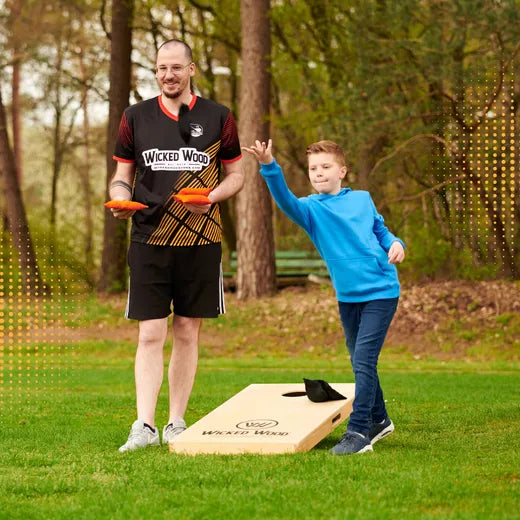
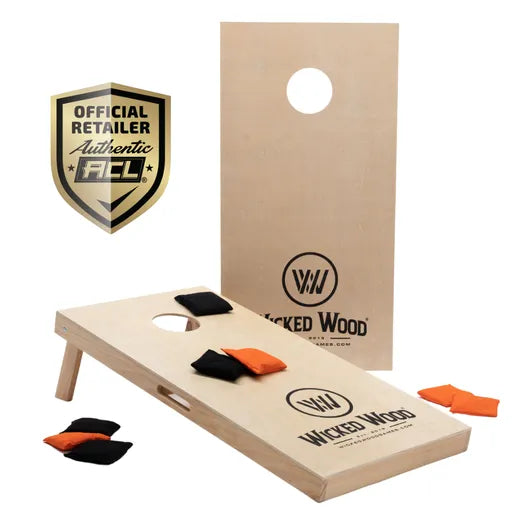
Cornhole is a throwing game in which players toss small filled bags toward a raised wooden board with the aim of scoring points. The bag must land on the board or fall through the hole.
- 2 players or 2 teams of 2 players
- 4 bags per player/team
- Goal: bags in the hole or on the board
- The winner is the first to 21 points
Want to know more? Read the full cornhole rules and scoring or check the official cornhole distances.
Why strategy is so important in cornhole
Many players think that cornhole is about power or luck. In reality, it is a tactical sport in which control, precision and smart choices are central.
Good strategy helps with:
- consistent throws and fewer mistakes
- better exploiting scoring opportunities
- putting pressure on your opponent
- weighing and minimizing risks
- recognizing key moments in a match
In short: skills make you a good player, strategy makes you a winner.
Basic principles of cornhole strategy
1. Know the cornhole rules & scoring
You can only play smart once you understand the cornhole rules and cornhole scoring system. The most commonly used scoring system is cancellation scoring.
Short explanation of scoring rules:
- Bag on the board: 1 point
- Bag in the hole: 3 points
- Points cancel each other out
- Only the point difference counts per round (frame)
Example: you score 7 points, your opponent 5 → you get 2 points on the scoreboard.
Those who understand the cornhole scoring know exactly when to play aggressively and when defense is smarter.
2. Distance and stance
The official cornhole distance between the fronts of the boards is 8.23 meters (27 ft). The more consistent your stance per throw, the more stable your results.
Tips:
- Use a fixed position next to the board
- Place your feet straight toward the throwing direction
- Let your arm swing smoothly (similar to a bowling throw)
- Keep your throw low and controlled
- Adjust your position depending on where the bags are on the board
More about technique? Check out our cornhole technique guide.
3. Choose the right throwing style
Not every throw fits every situation. The cornhole game has several throwing styles, each with its own advantages.
Common throwing techniques:
- Flat throw: flat and stable, ideal for scoring consistently
- Arc throw: higher arc, makes bags “land softer”
- Slide shot: bag slides toward the hole
- Block shot: deliberately placed in front of the hole to block your opponent
- Airmail shot: high throw straight into the hole, over obstacles
- Push shot: pushing your own bag (or cluster) forward toward the hole
A good cornhole player masters them all and knows exactly which throw yields the most in which situation.
Advanced cornhole strategy tips
Play tactically per situation
1. When you are behind
- Play more offensively
- Use more airmails to make big gains
- Accept a bit more risk – you need to close the gap
2. When you are ahead
- Play defensively: block shots in front of the hole
- Focus on safe 1-point scorers
- Force errors from your opponent instead of taking risks yourself
3. Don’t leave easy points on the table
Even one point can make the difference in matches. Be alert to simple opportunities — for example a straightforward bag on an empty board.
Analyze the board & conditions
Most cornhole boards have a slight incline and are made of smooth wood. To score optimally you must assess the lane and conditions.
Pay attention to:
- How smooth or grippy is the board?
- Is there wind (for outdoor games)?
- How did previous throws land (bounce, slide, stop)?
- Where are the bags already lying on the board?
By adding a slight spin to your bag on release, you can prevent it from flipping and sliding off the board.
Play smart against different types of players
Against weaker players: calmly build your points lead with safe throws.
Against strong players: play blocking and force them into airmails or difficult shots.
Examples:
- Opponent is good at slide shots → place a block in front of the hole
- Opponent often misses → go for maximum scoring attempts
Common mistakes in cornhole strategy
1. Throwing too hard
A throw that’s too hard causes bouncing, overshooting or rolling off. Strategy starts with control, not power.
2. No consistent technique
Constantly changing grip, foot position or speed leads to unstable throws – and therefore unpredictable results.
3. Only attacking
Always going for the hole sounds bold, but it’s not always smart. Sometimes defense (blocks, safe 1-pointers) is the fastest route to victory.
4. Not doing the math during the game
Strategy starts with understanding the score, frames and risks. Know the cornhole scoring system so that you always make the right decision during the game.
Strategic styles of play
Board control
With “board control” you determine where the game is played. You use:
- block shots to close off lines
- angles and sidelines to force the opponent
- slide shots to profit from your own blocks
Point management
Continuously analyze:
- How much you are ahead or behind
- Whether you should play aggressively or conservatively in this frame
- Whether you can “win” the round with one safe bag
Shot selection
Not every throw has to be aimed directly at the hole. Sometimes it’s smarter to:
- block and force your opponent into mistakes
- create a cluster to score later with push shots
- play safely for 1 point instead of 3 points with high risk
Technique tips: how to improve your throw
1. Stable wrist & flat bag
Keep your wrist stable and let the bag fly as flat as possible. Excessive rotation makes your throw unpredictable.
2. Consistent release
Release the bag at the same point in your swing every time – not too early, not too late. Consistency is more important than “magical” technique.
3. Aim at the hole, not at “the board”
Focus on a small target (the hole or a specific spot on the board) for maximum precision.
4. Stick to a fixed routine
Professionals have a fixed pre-shot routine:
- the same stance
- the same preparation (breathing, number of swings)
- the same release
Tip: Want to improve your technique right away? Check out our cornhole sets and set up your own training setup at home.
Training methods for better strategy & execution
1. “100-throw challenge”
Throw 100 bags per training session with a goal:
- 50 flat scoring shots
- 25 block shots
- 25 push shots
Write down what works and where you miss – this way you can see your progress.
2. Simulate match pressure
Play against better players or keep score strictly. Competitive pressure sharpens your focus and decisions.
3. Analyze your own game
Film yourself and pay attention to:
- arm angle and swing
- rotation of the bag
- landing and sliding on the board
For serious training, good equipment is important. Think of sturdy boards and predictable cornhole bags from Wicked Wood Games.
Mental strategy in cornhole
Focus & rhythm
Cornhole is just as much mental as it is physical. A calm mind leads to better decisions and throws.
Recommendations:
- Breathe calmly and deeply before each throw
- Don’t dwell on a missed throw – the next shot is more important
- Stick to your routine, especially under pressure
- Accept that sometimes playing defensively is the best choice
Equipment choice & its impact on strategy
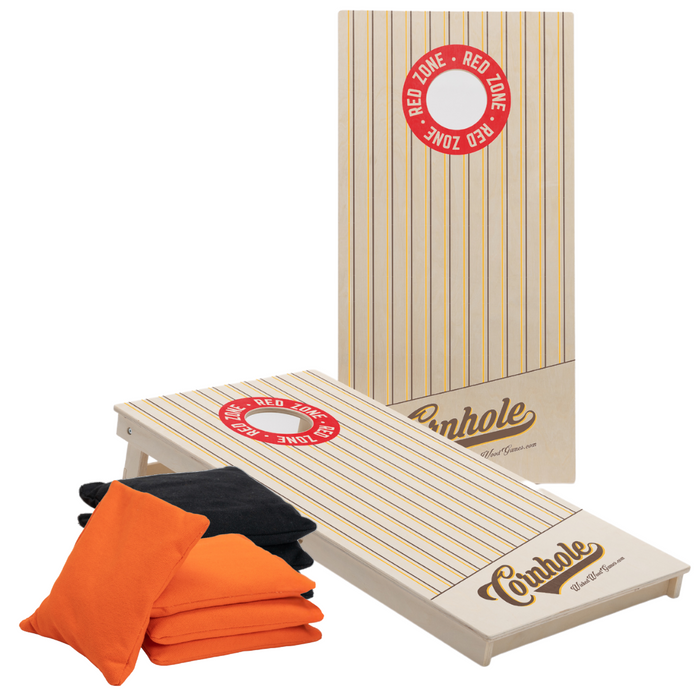
Cornhole boards
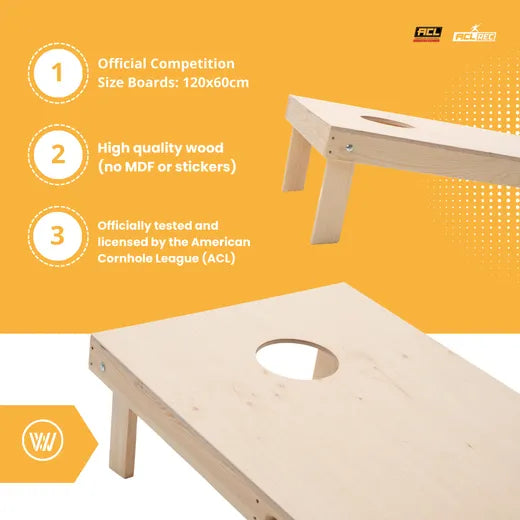
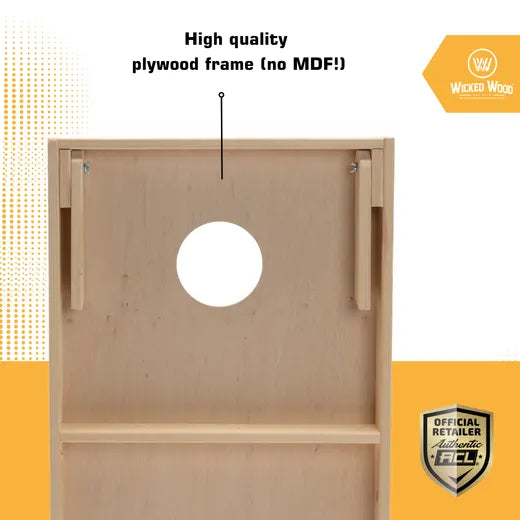
Good-quality wooden boards with a consistent finish determine how the bags slide or stop. On plastic or cheap boards, strategy is harder because the behavior is less predictable.
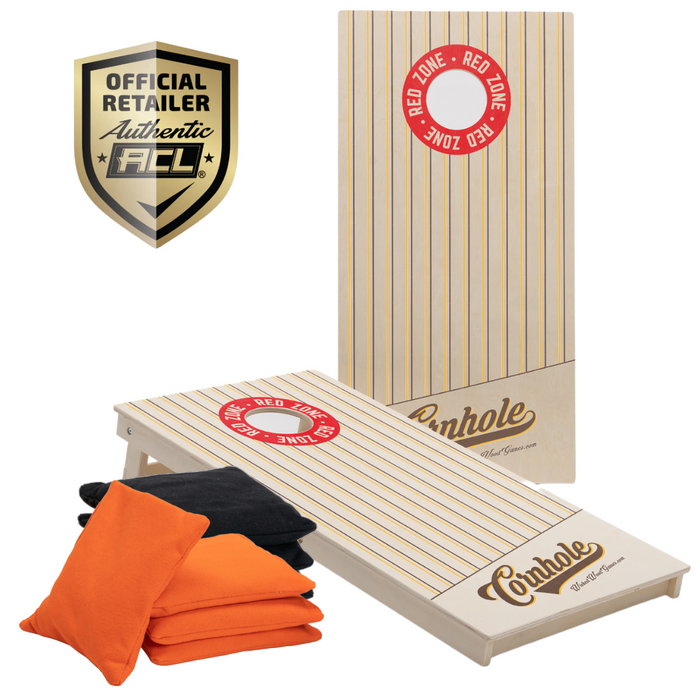
With a good set of cornhole sets you play more consistently and can train strategy more effectively.
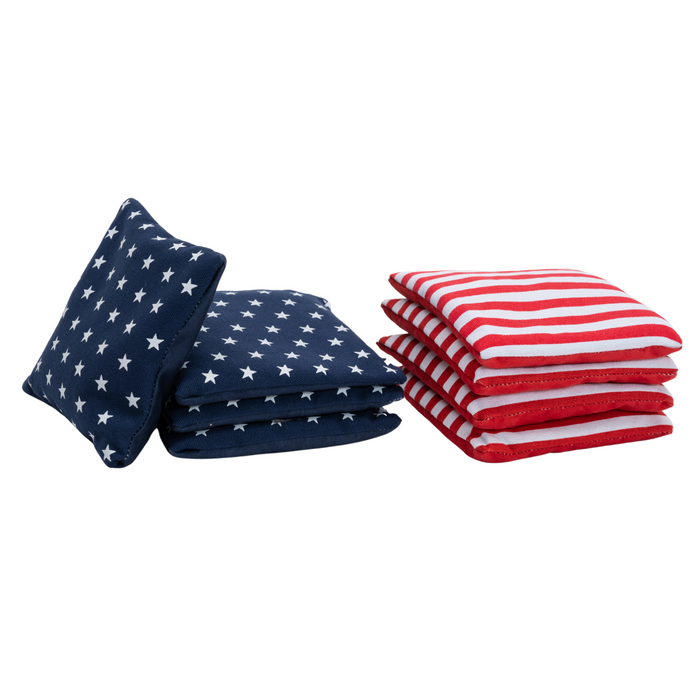
Bags
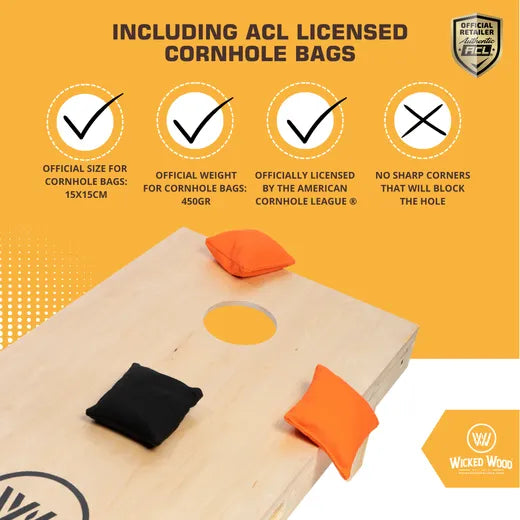
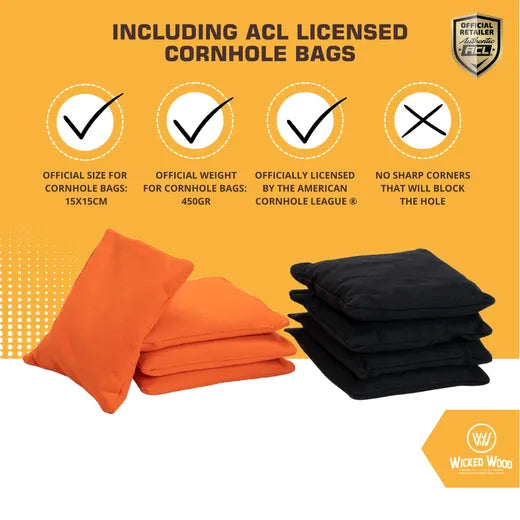
There are bags with a slick side (smooth) and a sticky side (more grip):
- Slick: slides further, ideal for slide shots
- Sticky: stops faster, perfect for blocks and control shots
Professional players consciously use both sides, depending on the situation.
Check out the selection of cornhole bags from Wicked Wood Games and find a set that suits your playing style. Want everything in one overview? Then visit the cornhole shop.
The best strategy in the final phase of the game
When you’re close to 21 points
- Play ultra-conservatively
- Force mistakes from your opponent instead of taking risks yourself
- Aim for safe 1-point scorers instead of difficult 3-pointers
When you are far behind
- Start taking more risk deliberately
- Use airmail and aggressive push shots to create big swings
- Accept that a few missed throws are the price for a possible comeback
FAQ – cornhole strategy
1. What is the official distance in cornhole?
The official cornhole distance is 8.23 meters between the fronts of the boards. Players stand next to their own board and throw toward the opponent’s board.
2. How does cornhole scoring work?
A bag on the board is worth 1 point, a bag in the hole 3 points. At the end of a round, the points of both players are compared and only the difference is added to the score. You can find more explanation in the cornhole rules and scoring.
3. What is a block shot?
A block shot is a defensive throw where you deliberately place the bag in front of the hole to block your opponent’s slide and force them into a difficult throw.
4. When should I play offensively or defensively?
If you are ahead, playing defensively is often smarter (blocks, safe 1-pointers). If you are behind, a more offensive style with airmails and aggressive slides pays off.
5. Which equipment supports the best strategy?
Official wooden boards and high-quality double-sided cornhole bags (slick & sticky side) give you the most control. This allows you to consciously use blocks, slide shots and push shots.